Gift4BPBObirds Team
Dear supporters of Bruce Peninsula Bird Observatory and Birds Canada’s birdathon. Thank you for your generous support from my 2025 effort. If you have not yet contributed, it is not too late. But, the birdathon fundraiser ends on June 1, meaning that there are only a few days left to support BPBO by sponsoring my BPBO birdathon team. My goal is to raise $4,000, and as of May 19, we have raised over $2,200.
Here is the link to make a charitable donation. https://www.canadahelps.org/s/j44GMW
I did my birdathon on Friday May 16. The weather was favourable, as the winds were from the south and the air was unstable with rain or thunderstorms forecast for the afternoon. Storms and rain stop the migration of birds – a good thing for birders as that means there are more birds around to observe (if the conditions for birding are not compromised.) The south winds bring the birds migrating northward.
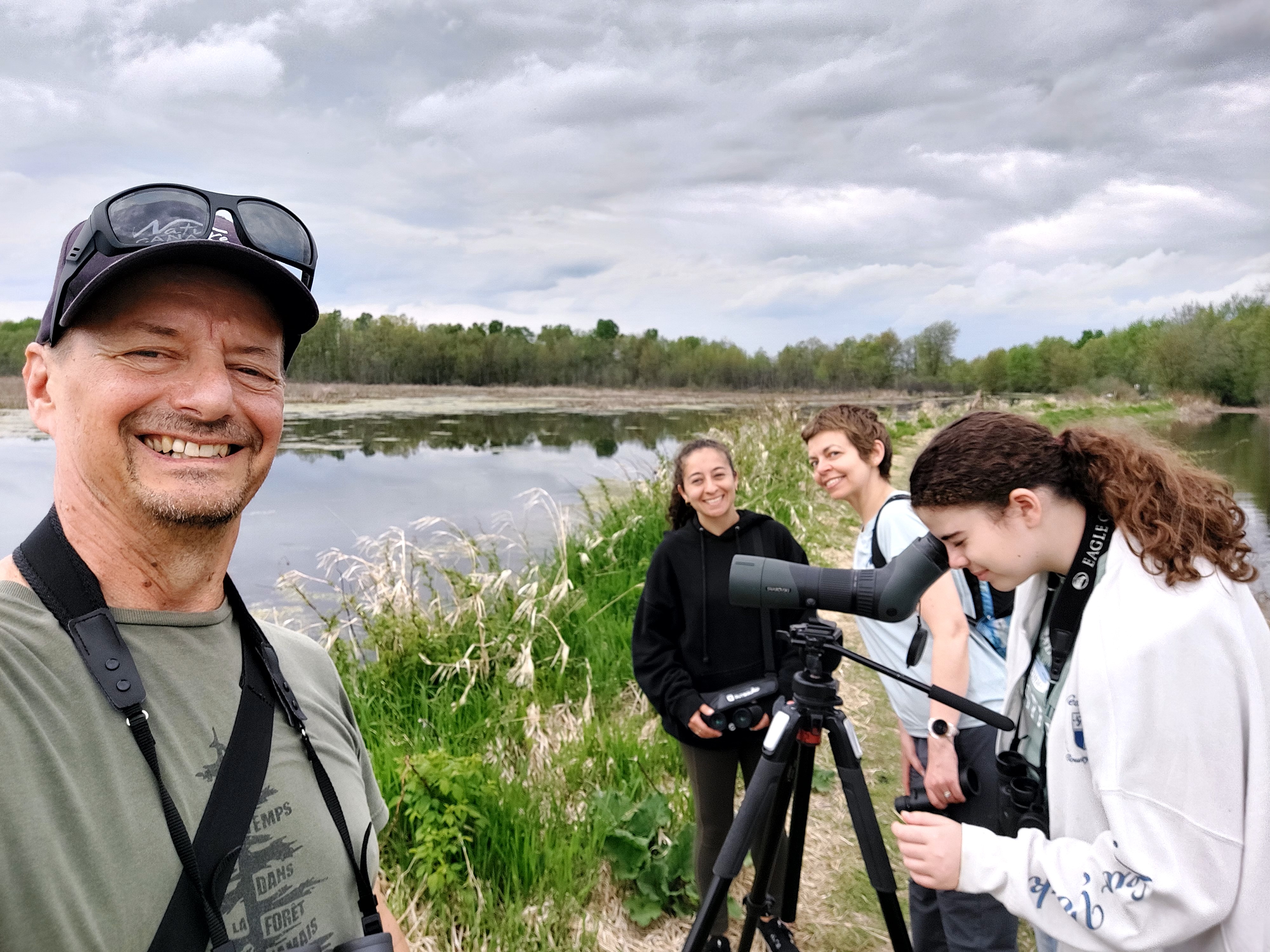
I had arranged to take three people birding who I had never met before. One of them was Alex, who had bid and won a morning of birding with me at Nature Canada’s annual fundraising on-line auction the previous year. Her daughter Esther and their neighbour and friend Aara completed the group. As they live nearby, I planned to introduce them to a few of the best local birding sites over the morning. We started in la Forêt Boucher, a large Gatineau-owned forest on the northeast side of the Aylmer sector of Gatineau and a 3-minute drive from their house. We were on the new trail system by 6:30 am to the delight of thousands of mosquitos. I felt bad for my group, but they showed impressive patience, thanks in part to their repellent. As is often the case in birding this time of the year, you hear far more than you see, so I spent some time showing them images of the birds that I heard singing, and playing the songs on an app so that they could understand what they were supposed to be listening for amongst the chorus of song and hopefully believe that I wasn’t just making it up. Aara had taken Michael Runtz’s famous ecology class at Carlton University a few years back and was clearly inspired to learn more about birds and nature. I have met many alumni from Michael’s course, and to a person, they were all deeply inspired. It was satisfying watching Esther and Aara actively learning and recognizing some of the songs. One of the bird highlights was a beautiful Northern Flicker posing on a tree about 20 metres from us. It filled up the field of view in my spotting scope. A Wood Thrush serenaded us from only a few metres away. It is hard not to get swept up in emotion from this birds angelic notes. We heard several warbler species but saw few. We left Forêt Boucher after just over an hour with 29 species on our lists.
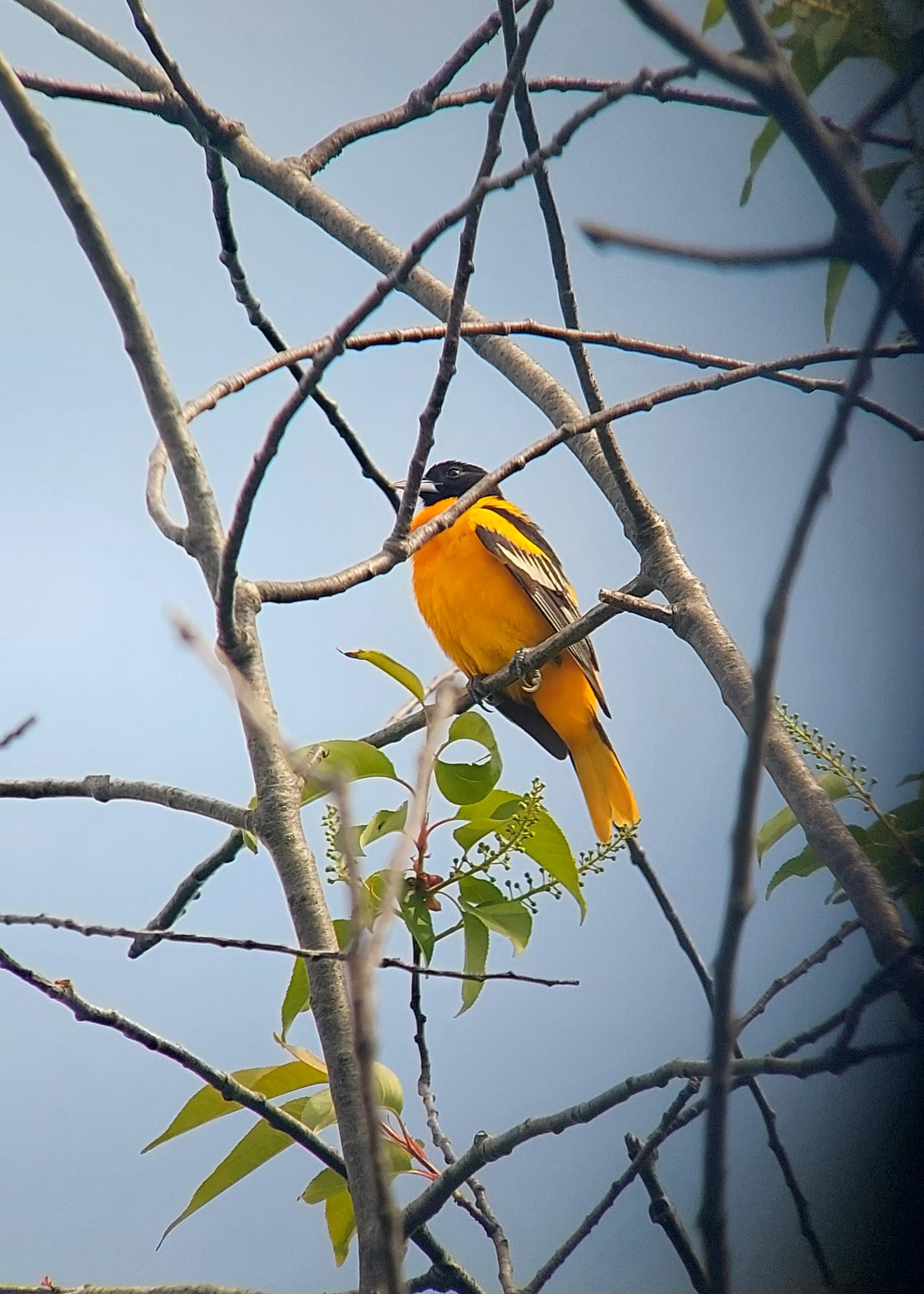
The next stop was the Deschenes Rapids and Marais Lamoureaux at the south end of Rue Vanier in Aylmer. This was a new location for my entourage, so I was delighted to share it with them, as the birding is always superb in the spring. It did not disappoint! A short walk along the bridge and into the oak forest was very productive. A superb, Scarlet Tanager teased us with its hoarse melodies before revealing itself. Several Baltimore Orioles delighted Alex, especially.
Aara even spotted a female building her signature pendulant nest, well hidden in a small tree. Great Crested Flycatchers were active in the swamp forest. One in particular was inspecting woodpecker cavities in standing dead trees as potential nesting sites. A Black-throated Blue Warbler, American Redstart and several Yellow warblers actively “cleaned” the foliage, picking off tiny caterpillars that were intent on eating the fresh leaves. On the great Ottawa River, we spotted Double-crested Cormorants, and Ring-billed Gulls floating down the river and taking flight at the beginning of the rapids, as well as three Common Mergansers resting in a quiet eddy current near the shore. Conroy Island was bustling with nesting gulls, Cormorants, Great Egrets and Black-crowned Night Herons. After about 75 minutes we left with and impressive 39 species for that location.
After a delightful stop at Café Mulligan in Aylmer, we drove across Gatineau to another outstanding area that is completely different, le Marais aux Grenouillettes. This reserve faunique of the Gouvernment du Quebec is well known by hunters in the fall and birders in the spring. It is part of a complex of wetlands that stretch along the north side of the Ottawa River from eastern Gatineau to past Plaisance. Many Bobolinks greeted us along the narrow gravel road into the reserve. They were busy chasing each other and filling the air with their R2D2-like songs. The road ends in a very small parking area, but a trail continues to a series of dykes separating the Ottawa River from wetlands that formed behind the dykes. From the dykes we could observe a good variety of marsh birds, including Great Blue Heron, Blue-winged Teal, Wilson’s Snipe, Common Gallinule, Pied-billed Grebe, Swamp Sparrows and of course, Red-winged Blackbirds. The last bird we observed as a group was a Northern Harrier, gliding on tilted wings over the hay fields on the way out to the main road. Our short visit to this area was outstanding, with 42 species.
After returning home in the early afternoon, I did some things around the house, went shopping, made dinner and was reminded by Cris that I still had time to do some birding. So at 7H30 pm I hopped on my bike and rode quickly to my old neighbourhood where Chimney Swift used to be found. They were not at the rendezvous but I did add a few new species along the way. I hustled back to my neighbourhood and took my bike through the corridor Champlain, hoping to hear or see some of the missing forest birds from my day list. Incredibly, though it was starting to get dark in the forest, I was able to hear or draw in all four of my target species; Black-throated Green Warbler, Pine Warbler, Blackburnian Warbler and Brown Creeper. By the time I left the dark forest the sun had just set, but I did manage to incite a White-throated Sparrow to song. A Swainson’s Thrush called at me from the dark forest as my bike drifted past, probably telling me that I should have brought my bicycle light. I soldiered on through the darkness, using my cell phone light to alert any bears. The final bird of the day was a reliable American Woodcock, that Cris and I first found while walking back from the grocery store on March 21st!
My species total this year was 82. Thanks to Alex, Esther and Aara with whom I enjoyed the first 73 species in the first eight hours and to my wife Cris who pushed me out to observe the final nine. Thanks especially to you, my supporters and sponsors of BPBO. Your generous support will help our bird observatory in a significant way by covering the food subsidy costs of our long-term volunteers.
I have returned to the Board of Directors of the Bruce Peninsula Bird Observatory, and I am again President, with a very soar arm, recovering from a forceful twist. Anyway, there will be lots to talk about, maybe beyond the balcony. That might be my working title for this year’s posts.
So, here is the deal and message for my birdathon. (First one I did was over 40 years ago, when it was called the Baillie Birdathon).
Dear supporters of Birdathon and the Bruce Peninsula Bird Observatory. I have returned to the Board of Directors and have taken on the roll as President again, after a wonderful sequence of for Beth-Anne Currie, the past President now, who guided us through Covid-19 and the Great rise of Georgian Bay that threatened our humble research station and the road to it. I was not going to do birdathon this year, but my conscience got the better of me, and BPBO needs your support. Last year BPBO received over $2,000 of the nearly $4,000 raised, and that covered costs of our volunteer food stipend for the dozen or so volunteers who donate their time to support Stephane at the station. We need that support, so please support me generously!
Go here to support BPBO https://www.canadahelps.org/s/j44GMW
I think it was in 1982 or so that I did my first birdathon. I don’t recall much, except that those first several years of birdathons, I would wake up at 3 am and be out of the house or tent by 3H30, chasing after owls and rails, and listening for the few nocturnal flight calls that I had learned by then. About 20 hours later, after trying for those owls that we missed in the morning we would return to a campsite, red-eyed and over stimulated from nonstop concentration. Those first birdathons were for the Long Point Bird Observatory and often took place in the fabulously diverse Long Point area. Nineteen years later, a few of us established the Bruce Peninsula Bird Observatory (BPBO) and its migration monitoring station at the northeast tip of the Bruce Peninsula. As a founding Board member, BPBO became the object of my fundraising efforts. For many years, my buddy, and a co-founder of BPBO, Rod Steinacher and I would do birdathon together. Our area was generally from Cape Hurd to Cabot Head, along the northern tip of the peninsula, and in better years would yield upwards of 120 to 130 species, sometimes more. We were careful to limit our driving and in fact spent most of our time on foot. Probably starting about 12 years ago, we would end up at Rod’s place sometime in early to mid-afternoon, otherwise known as the “dead zone” for observing lots of birds. It was easy to justify a short nap. Each year that short nap grew a bit longer, and maybe would morph into an early supper before heading back out for an hour or two of birding before dark. We would end our birdathon at the iconic Crane Lake, now part of Bruce National Park. I am pretty sure that our midday siestas had nothing to do with lower species counts in the latter years of our upper Bruce birdathons. According to a major study from USFDS and others, North America lost 3 billion birds between 1970 and 2020. That surely had to be the reason why our birdathon tally had dropped, and not the afternoon naps.
The last several years, I’ve done a “green” birdathon – meaning really just sticking close to our home in Gatineau and moving by foot or by bicycle within a three kilometer radius of our house. This year, I chose May 24, 2024, as birdathon day. I chose it because it was a Friday, I didn’t have work meetings, and it was literally the only day in May without other obligation, except for the ones I forgot about.
To maintain tradition, I was up at 4 am, and after 15 minutes of searching for my bike light, and confirming that I probably had left it in Cuba, I found my wife’s bike light which served my purposes.
Going outside, I was struck by the cool temperature – around 10, accompanied by a light wind. I was wearing my cycling shorts, a light t-shirt and a very light windbreaker. As I rode in the dark up the street, I realized how cold and quiet it was. Onward I went along the bike trails through the Corridor Champlain, and the two kilometres of forest. Birds were awakening. An Alder Flycatcher whirred in the distance. Wood Thrush song filled the forest. All of the breeding warblers revealed themselves, one song at a time, almost like I was in Bobcaygean. But I wasn’t. I was in the forest near my home and when I returned just after 6H00 am, I am pretty much certain that my core temperature was around 30C. You know that point when you are too cold to shiver? I was close, to that point, but I had accumulated 44 species in about 90 minutes, so that was promising. What wasn’t promising though was the wind. An icy wind was picking up and in those 90 minutes it went from a steady breeze to near gale force, causing tree limbs to sway and the forest canopy to roar. When considering weather conditions that make birding tough, after torrential rain, this type of wind is pretty much the worst. However, as the wind was from the northwest, I was confident that I could find sheltered areas that might have birds.
These were my thoughts during my hot breakfast. Perhaps, I thought, I could find even more clarity in my thoughts if I lay in the warm bed for five minutes or so. The bed was irresistible. Yes, maybe one of those 5-minute power naps would refresh me.
Ninety minutes later, I woke in a start, realizing that I missed one of the key parts of the day. I looked gloomily outside and saw trees bending in the wind. Maybe I didn’t miss much. But I gathered up my courage, dressed more warmly, and went back out on my bike, this time with the spotting scope strapped on the back. I headed toward the lookout behind l’Université du Quebec en Outaouais. From my perch above the river, I could see a few of the bird colonies on islands within the Ottawa River – mainly occupied by Ring-billed Gulls and Double-crested Cormorants. Careful examination of the large bare lump of rock covered with Ring-billed Gulls revealed a pair of Herring Gulls at the very top, in their “office.” To the right was another colony but on a densely forested island. The dominant species was Double-crested Cormorant, but I had a hunch other species were present. I decided to focus on one area where there was a bit of a gap in the trees. After a couple of minutes, a large pale bird flashed some feathers then disappeared behind the foliage. “Stay with it” I said to myself. Eventually I was rewarded with a better view. Grey colour, head plume – a Great Blue Heron. But something else was there, smaller. I was going to be patient and after ten minutes a Black-crowned Night Heron dropped to the ground below a tree and quickly disappeared, but not before it was on my list. Other birds were active around me. A small flock of Cedar Waxwings flew out from below me. A pair of Rough-winged Swallows swooped past. Gradually the numbers grew. I left the lookout and rode west along the bike path past the Champlain bridge and towards a small wetland on the river near Baie Simard. Outside of an out-of-place Ring-necked Duck, none of the usual waterfowl suspects were to be found – no Wood Ducks, no Mergansers, no shorebirds and no evidence of any migration. Was it over? I found a pair of Killdeers in the muddy derelict lot near the big mall off Plateau, and a few other species before returning home. I arrived a bit after 1 pm, very hungry and needing an energy boost with 69 species logged.
After lunch, I realized that, in fact, I did have obligations and would have to put my birdathon aside for a few hours. I had to prepare for a bird banding outing the next morning, which meant driving to Luskville about 40 minutes away and checking out the property where I would be banding. When I got back, I was reminded that it was the last gymnastic class of the year for my grandkids. We had to cross the river into Ottawa to find the gym near the big Ikea building. After the class, we went to Ikea for a classic Ikea meal. For a while, I forgot I was supposed to be birdathoning, but at 7:30 pm I remembered. We rushed home and minutes before sunset I headed out again on my trusty horse, (I call my bike “my horse” sometimes). Just before leaving, Cris, my wife, asked me if I had a plan. “Yes” I said. “I need to get to 70 species.” “How?” she asked “It’s almost dark.” “With the ‘wood’ birds” I said. Three minutes by bike from our place is a storm water management pond – a good one – with lots of natural vegetation and an island in it. “There must be a Wood Duck there” I thought. BINGO, there was a pair. I barely needed to stop to see them, then I was off to a spot where we had observed an American Woodcock doing its fabulous courtship display about three weeks before. I arrived there a few minutes later – too early for Woodcocks to be displaying. The sun had just set, and typically they don’t start calling and displaying until about 20 minutes after sunset. I decided to ride through the Champlain corridor again and check the area on the south side which was open scrubby forest, good habitat for Woodcocks. Along the way, a Northern Waterthrush sang – new to my list. Finally near the golf course, the night was swallowing the day, and I heard that distinctive “peent” of a Woodcock, rounding me out at 72 species.
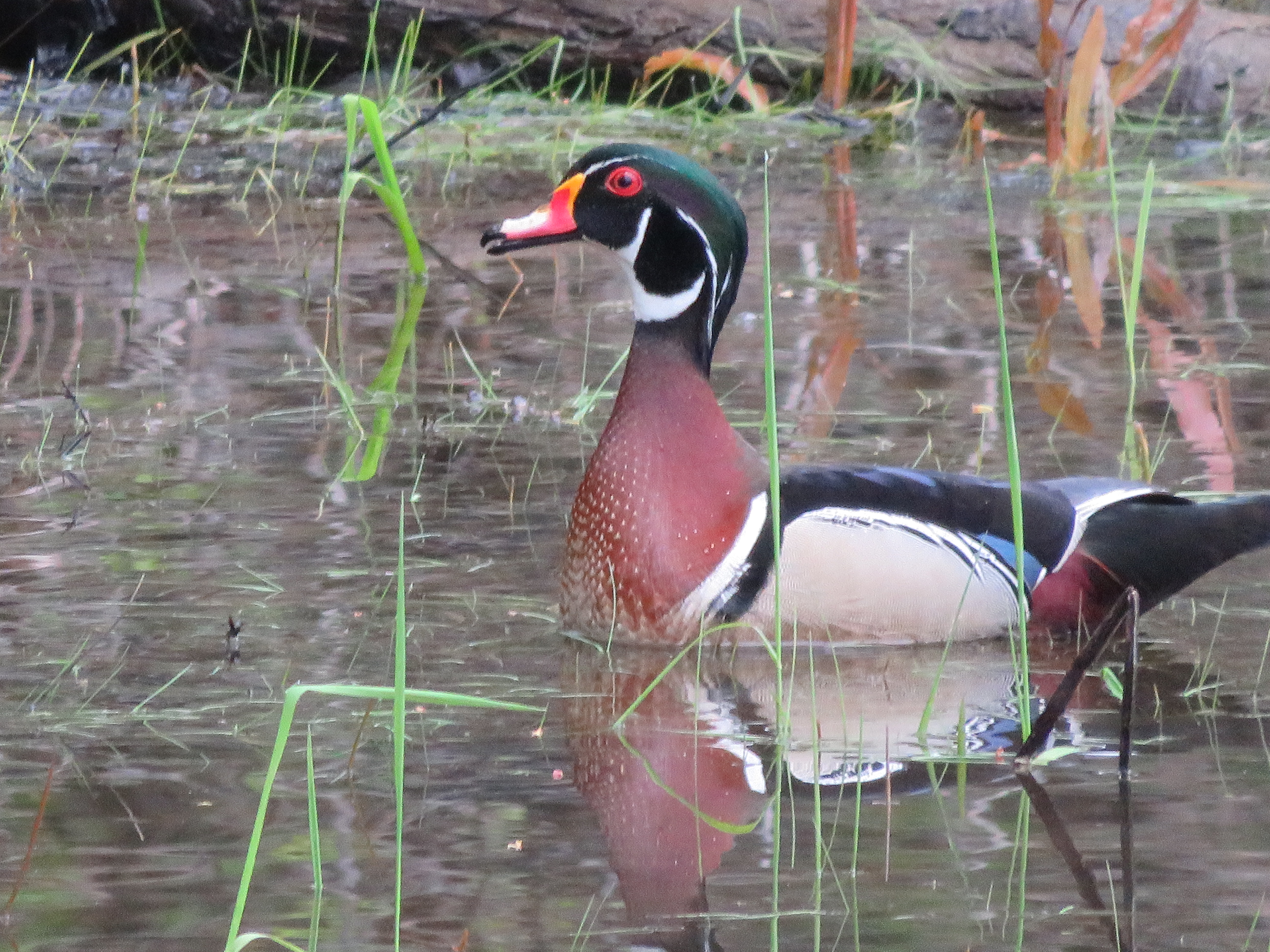
So that’s my story. It was a different birdathon. Very late in the migration season, though I did detect many Swainson’s Thrushes, which were clearly migrating. But other than that species, I think that most of the observations were of breeding birds. It was still fun, but challenging.
I want to thank those of you who supported my birdathon for your generosity. I still need a bit more to get us over that $3000 target. Please consider helping us get there. To sponsor me, or top up your contribution, just follow the link to my birdathon page by clicking here.
Thank you so much!
Ted
In a few weeks I will be doing my 40th something birdathon. The object of this birdathon is the Bruce Peninsula Bird Observatory. Last week I returned to the BPBO Board of Directors, after a hiatus for a few years. I am one of BPBO’s founding board members, and have a long history with BPBO and before BPBO with Cabot Head, one of my favourite places. BPBO is a non-profit, member-based charity with a mission to promote and foster the study, appreciation and conservation of birds and their habitats in the Bruce Peninsula region of Ontario, Canada. We are the voice for the birds on the Bruce. You can make that voice stronger by supporting my birdathon with a generous donation. Click here to go to my sponsorship page on the Birds Canada Birdathon website.
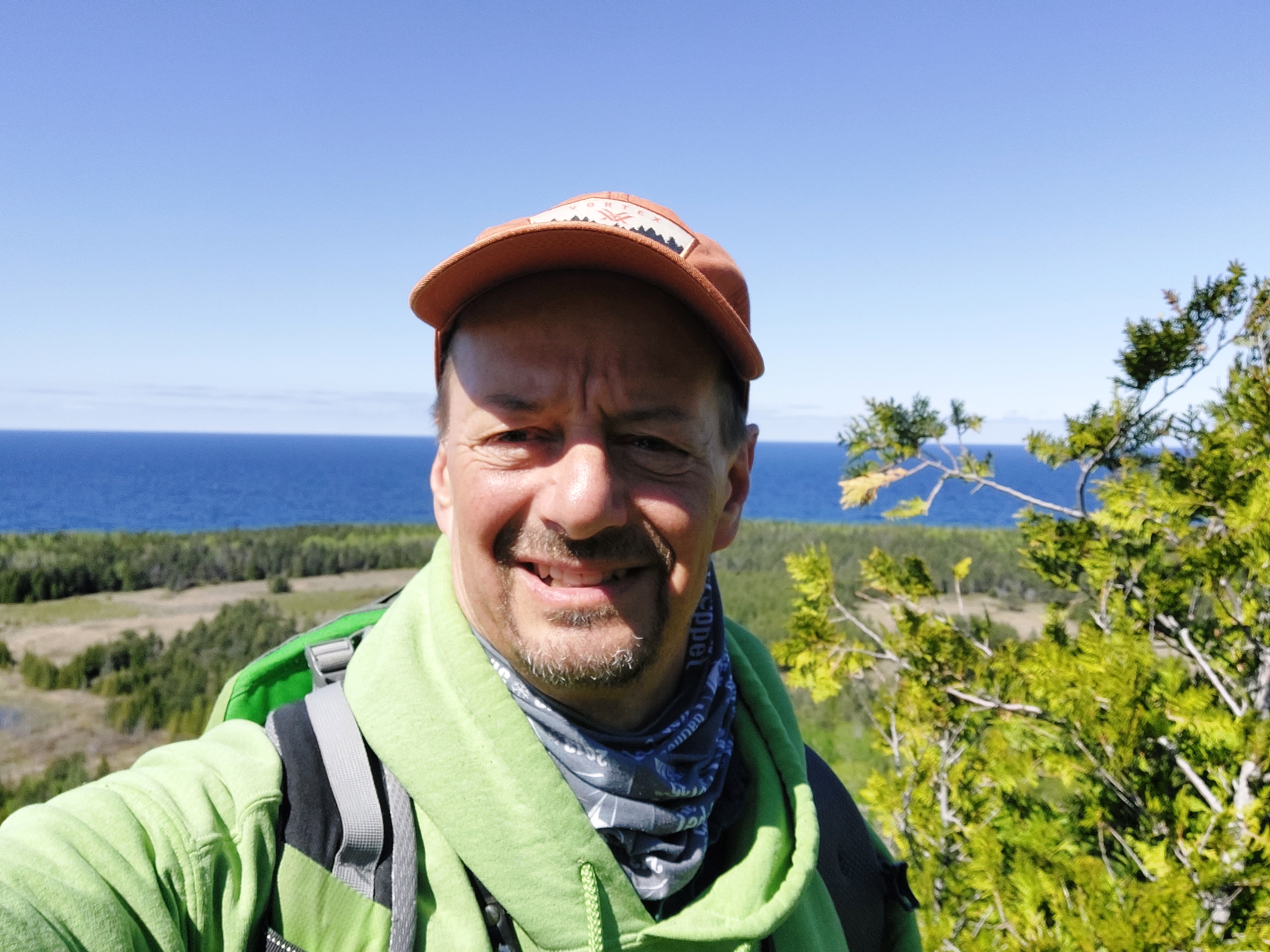
We really want to get to $3000 of sponsorship. Here is how your money will help. By supporting Gift4BPBOBirds you will help assure meals for young volunteers traveling from around the world to Cabot Head Research Station for hands-on, life-changing positive experiences monitoring birds. Your donations will also help us replace the ageing mist nets in which we capture thousands of birds each year. We were able to replace 11 this year but there are 15, and any net can be rendered unusable by a deer or a bear, both realitively common in the Cabot Head area.
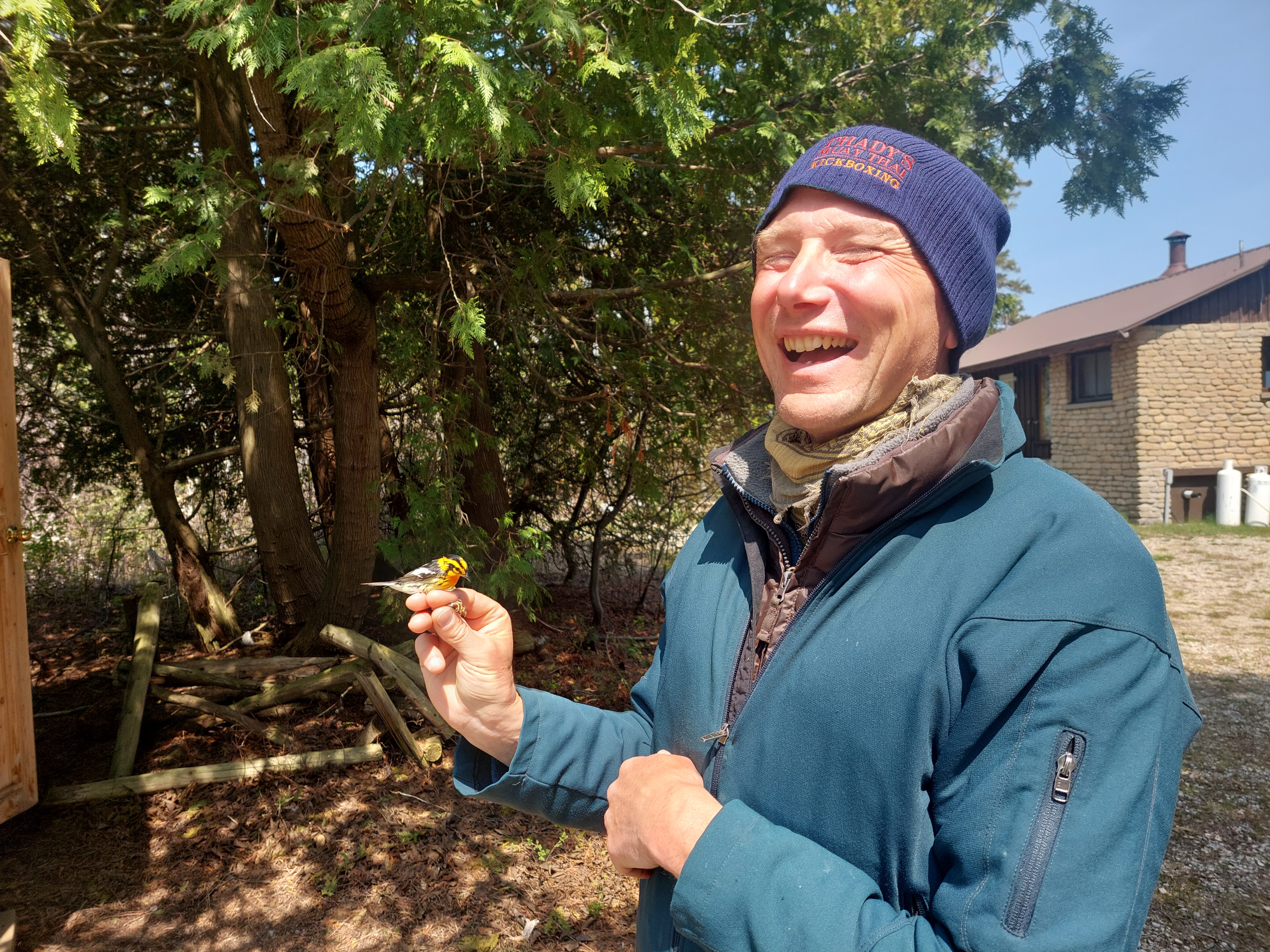
As a volunteer-directed charity, we depend on your support to do the important work we do at Cabot Head, and for promoting conservation of the birds on the Bruce. Please be generous with your support. I will be by doing this birdathon in late May, and have made a generous donation myself. Please join me and many others in supporting our beloved BPBO by clicking here. Help us get to and beyond $3,000. Most of your support will go directly to BPBO, while a portion will support the great work of Birds Canada.
Me releasing a Sharp-shinned Hawk near the banding lab.
Many thanks for your kind support.
At last count, we have raised $3045 for the Corvid-23 team of the Great Canadian Birdathon. That is wonderful! We are closing in on our target of $4,000. If you have not sponsored my Corvid-23 team, I hope that you will now through this link. Donate over $15 and you will get a tax receipt from Birds Canada. More importantly, you will be making a significant contribution to support the migration monitoring operations of the Bruce Peninsula Bird Observatory. Please read the two previous blog posts for more information about BPBO, and please be generous with your support.
I want to tell you now about my second birdathon day this spring. On May 23, one day after returning home to Gatineau from Cabot Head, I took the day off work for another birdathon. I wanted to see how many species of birds I could find within about three kilometres of our house, as I had done the past few years. The 78 species that I had observed during last year’s birdathon was a memorable moment for me. At the time, only my left eye had good vision (vision in my right eye was obscured due to a tear in the retina), and the famous “Derecho” storm that wreaked havoc in Gatineau and a wider swath of land in eastern Ontario and western Quebec, interrupted birdathon for about two hours in the afternoon. The previous year, I had counted 84 species in the same area.
I was up at 4:15 am, and shortly after, riding along the bike trail through the Corridor Champlain, a beautiful forest that borders my neighbourhood. The sky was already bright at 4:30 am but the trail through the forest was quite dark. The load chorus of songbirds suggested to me that I was likely too late for owls and woodcocks. Forever hopeful, I rushed to get to a scrubby wooded area to the south of the forest, about 2 km away that had potential for woodcock. As I raced down a small steep valley, crossing a small creek on a wooden bridge at the bottom, my bike was jarred by the bump onto and off the bridge. I heard a gentle thud that barely caught my attention. Instinctively, I stopped before cresting the hill. Jogging back down, I found my phone, face up along the rough pavement just after the bridge. I picked it up and the screen lit up – everything worked still. Relief and a reminder to me to relax. After all, this was supposed to be fun. Accidents happen when we rush. I know that all too well.
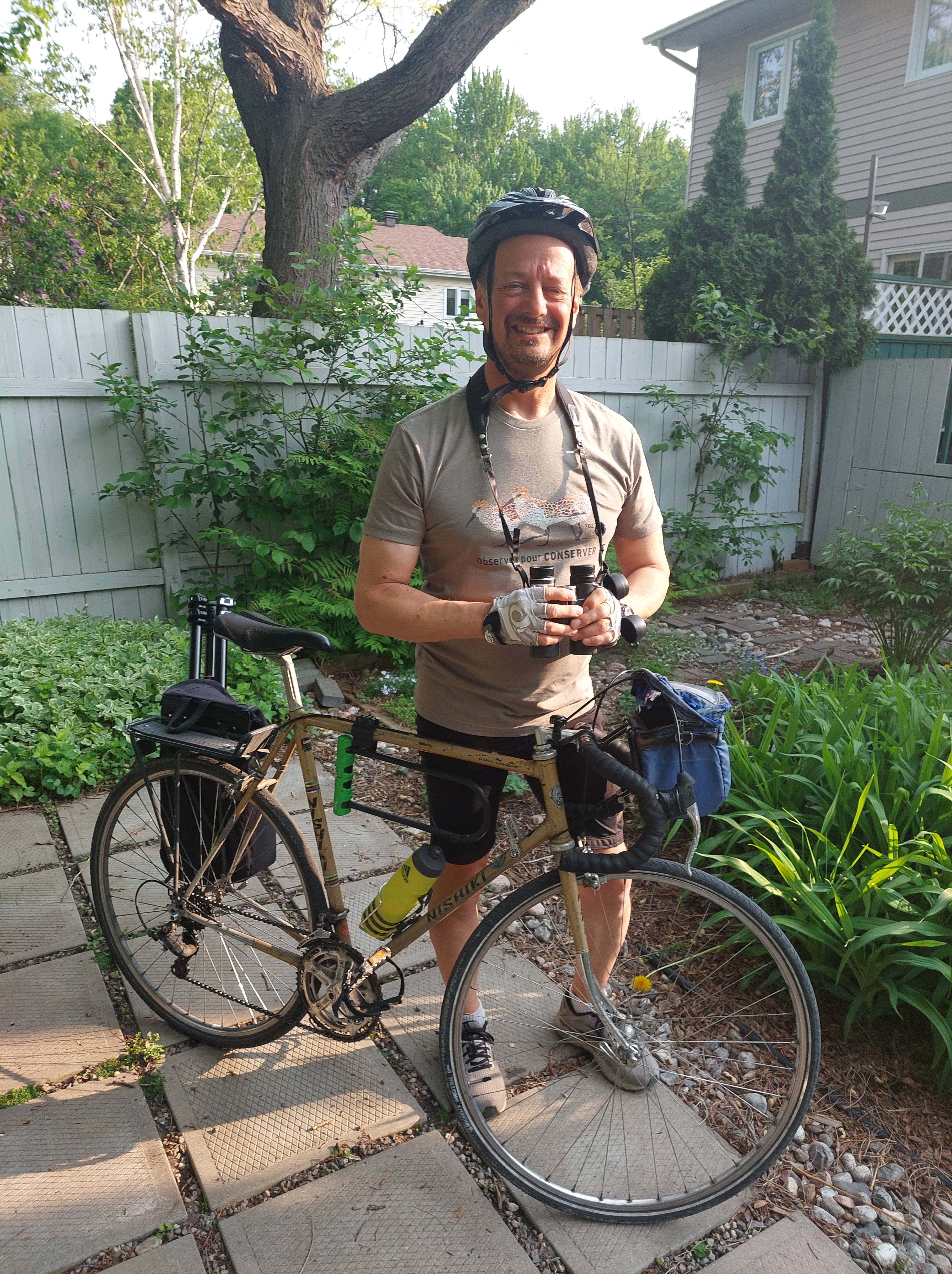
By the time I returned home at 6:15, I had 34 species on my list. Although there were many birds around, I could tell that I had missed the big migration days, as many of the migrants were gone. When my friends Stephen and Cheryl arrived with their bicycles at 7:00, I had added a few more species in our yard. I invited them to join me because they had the winning bid to spend a spring morning birding with me. This was from a Nature Canada fundraising auction a few months earlier. What could be better than taking a day off work in mid-May to go birding with friends? I even spiced up the occasion with a few delicious croissants and pastries from the wonderful nearby boulangerie.
I had planned a bike route that would take us through the neighbourhood forest into Gatineau Park for deeper forest birds. We would then head to the Ottawa River before returning home.
We executed the plan as intended, and we were rewarded by several good bird observations.
Highlight birds for us were several warbler species including Black and White, Chestnut-sided, Black-throated Green, Tennessee, Pine, Yellow, Common Yellowthroat and American Redstart. A Wood Thrush serenaded us with its beautiful, melodic song near the Sentier des Pionniers, just returning from its wintering grounds in Central America. Shortly after a gorgeous pair of Scarlet Tanagers came so close we could inspect each other as we rested in the shade of the deep forest along the bike paths in the south part of the Gatineau Park. A Broad-winged Hawk announced its presence high above with its two-part whistle. We then headed through the south extension of the Park to intersect with the Ottawa River. There, we perched ourselves on a cliff, high above the River behind the Université du Québec en Outaouais main campus. From our excellent viewpoint, we were able to observe a large colony of Ring-billed Gulls and Double Crested Cormorants. One pair of Herring Gulls ruled over the other species from the very top of the island. We also spotted Baltimore Orioles and Eastern Kingbirds. When we returned home around lunch, we had ridden 13.33 kilometres, and tallied 48 species.
At that point, my day total was just over 60 species. Cheryl and Stephen left, and I took a break as the warm and sunny weather seemed to have suppressed bird activity. After birding from the yard for a couple of hours, I reviewed my list and came up with a plan for the final three or four hours. After a nap and a quick supper, I headed back out around 6 pm, again through Corridor Champlain to another area along the Ottawa River. I was fortunate to pick up a few new species including Yellow-billed Cuckoo, Cliff Swallow and Killdeer. The water level in the Ottawa River was very high, meaning no exposed areas for shorebirds. In addition, there were virtually no ducks anywhere along the river, except for the usual suspects: Wood Duck, Mallard and Hooded Merganser. The final species of the day was a Swamp Sparrow, which I worked hard to find in suitable habitat just as it was getting dark. It was time to stop. I fell short of the numbers from the last few years, but felt the satisfaction that comes from knowing that I had made a good effort.
Numbers for the day:
Time birding: 13H40
Distance travelled by bike: 29 km
Species: 73
Thank you so much for your support. It is deeply appreciated.

It is a pleasure to share with you an account and description of my week at the Cabot Head Research Station of BPBO, including one of my “birdathon” efforts. I am grateful that you are considering or have sponsored my birdathon and by doing so, you are making a meaningful contribution to BPBO and to bird conservation. Please go to this link to sponsor me, if you have not already done so. I hope to raise over $4,000 in the birdathon, and most of that would support BPBO.
Cold! Bloody cold some might say. That is one way of describing the weather during the week. I was reminded of our several suffering volunteers from the south (mainly Nicaragua) over the years who spent approximately one month at the station in the spring. The geography of Cabot Head results in much colder temperatures than even a few kilometres inland. Surface waters in Georgian Bay and Lake Huron, that are metres from the Research Station, are about four to six degrees Celsius until mid to late June. This acts like a giant refrigerator for Cabot Head. On top of that, the actual weather much of this spring was colder than average. Despite the fireplace with an insert and recently replaced sealed window units, Wingfield cottage, where we stay, was always cold inside, except one day when the fireplace was roaring.
Ideally there should be three or four people making up the crew at the research station in the spring to cover all of the demands of extracting birds, banding, census and casual observations. There is the ideal and then there is reality. Reality is that volunteers cancel at the last minute (for all sorts of good reasons) resulting in gaps in personnel. Such was the case for me last year, as the guy who cancelled last minute due to my eye injury. This May, a few people cancelled, including a replacement volunteer for a cancellation, leaving just Stéphane and myself for one of the potentially busiest weeks of the year. As I am an experienced bird bander and skilled observer myself, and Stéphane is one of the best in the business, we were able to maintain full coverage.
One of the wonderful things about Cabot Head Research station is the facilities there. There are two fully functioning cottages – 1960s era – that have largely been restored by BPBO with the support of Ontario Parks, Ontario Trillium Foundation and various donors. These cottages are fully equipped and in fact rented out to stewards between June 10 and August 15, as a way of funding our operations and keeping a presence at the site over the summer. To find out more about summer stewardship program, click here.
The lights and pumps run off electricity generated by solar panels (soon to be augmented by a small horizontal wind turbine). We are 100% off-grid. There is a new septic system, and Ontario Parks staff test our high quality well water biweekly. Volunteers stay in a dormitory-like bedroom that can sleep up to four people. Other accommodations are available at Grebe lodge, about 30 metres away! It can hold up to 10 people.
One of my main contributions over the week was doing the census each day. Census is the only standardized sampling method that is done every day regardless of weather. I always find it thrilling, challenging and extremely enjoyable. Census starts on the steps of Wingfield Cottage, overlooking Wingfield Basin with the Middle, West and Bolder Bluffs in the background. After scanning the basin, the sky and recording any birds heard or seen, the census taker proceeds to the rocky tip of the peninsula through about 50 metres of scattered cedars and shrubs. Straying from the path exposes the observed to copious Poison Ivy but also affects the sampling area, so the census taker must stay close to the route and move at an adequate pace to cover the area, leaving a few minutes at the end. The census route ends at an area we call the Jack Pine barrens. It is anything but barren. This fascinating habitat consists of large openings of grass and sedge – dominated alvar, which can be either very wet or very dry, with coppices of Jack Pine. The entire area is a patchwork of openings and forest patches. The alvar is dotted with rare and threatened wildflowers, and is home to Black Bears and Massassauga Rattlesnakes. In the early evening in mid-May, the air buzzes and rings with the songs and displays of Eastern Whippoorwill, American Woodcocks and Common Snipe.
Weather patterns drive the migration, having a large influence on the number and diversity of bird species. The census results reflect the local weather conditions. For example, on Wednesday, I only observed 11 species. During census, the wind was from the north northeast, and it was cold. As Cabot Head is on the northeast corner of the Bruce Peninsula, it stands to reason that the 17 km cold wind from the NNE would drive birds away from Cabot Head, and the low temperature of 1 degree would mean less feeding activity. Two days later, the wind was south, and the temperature 7. The result was 64 species in one hour, as birds were brought to the tip of the peninsula, and had nowhere to go.
| Date | # of Species | Temp at start | Wind Speed | Wind direction |
| May 15 | 32 | 4 | 12 | SW |
| May 16 | 49 | 11 | 19 | SW |
| May 17 | 11 | 2 | 17 | NNE |
| May 18 | 46 | 1 | 13 | N |
| May 19 | 64 | 7 | 7 | S |
| May 20 | 37 | 8 | 14 | SW |
| May 21 | 38 | 8 | 11 | W |
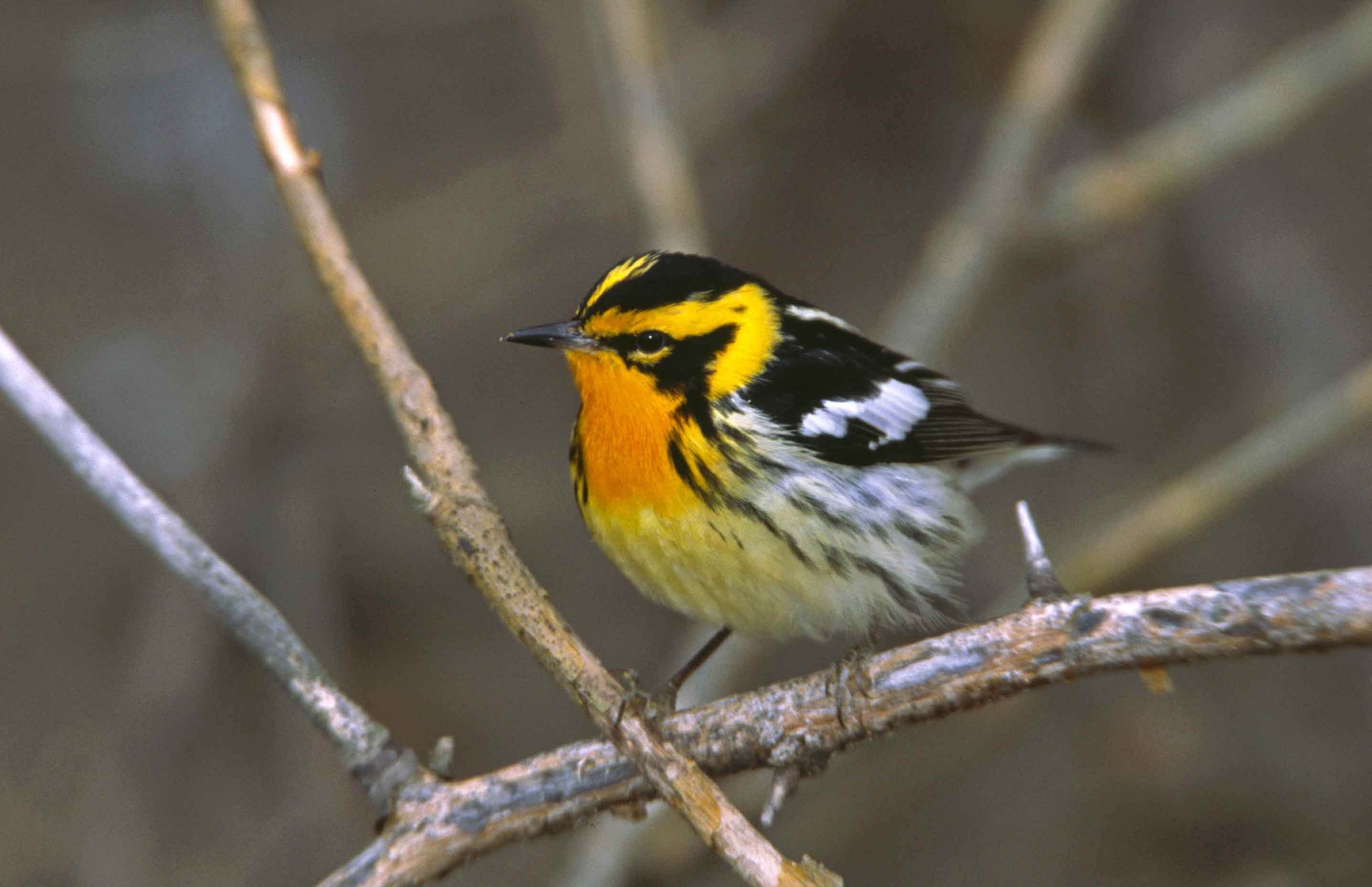
I will call Friday the 19th as one of my birdathons, because I observed lots of birds that day! Prior to census and opening the nets, I walked to the Jack Pine Barrens to hear the last of the American Woodcock’s twittering display and the Eastern Whippoorwill plaintive calls. An early Wood Thrush sang before sunrise, and I detected the call notes from Swainson’s Thrush, Gray-cheeked Thrush and Veery. While unfurling the nets, the hoarse notes of a Scarlet Tanager caught my attention. Then a Baltimore Oriole, then vireos. Suddenly the trees were filled with chips and squeaks and beautiful songs. There were so many birds around. At the start of census, a small group of shorebirds flew past me along Wingfield Basin. It was a group of Least Sandpipers, led by one noisy Ruddy Turnstone! A few minutes later, while looking out over Georgian Bay from beside Grebe Lodge, I observed a spectacular phenomenon in which dozens of small songbirds dropped out of the sky over Georgian Bay, desperately trying to return to the safety of the forests at Cabot Head. They had overflown the tip of the Bruce Peninsula during their nocturnal migrations, and chose not to continue across the 90 kilometres of Georgian Bay to the north shore, instead returning to the safety of Cabot Head. In the past, I’ve seen Merlins and even gulls roosting along the shoreline, flying out to attempt to capture and eat these tired migrants.
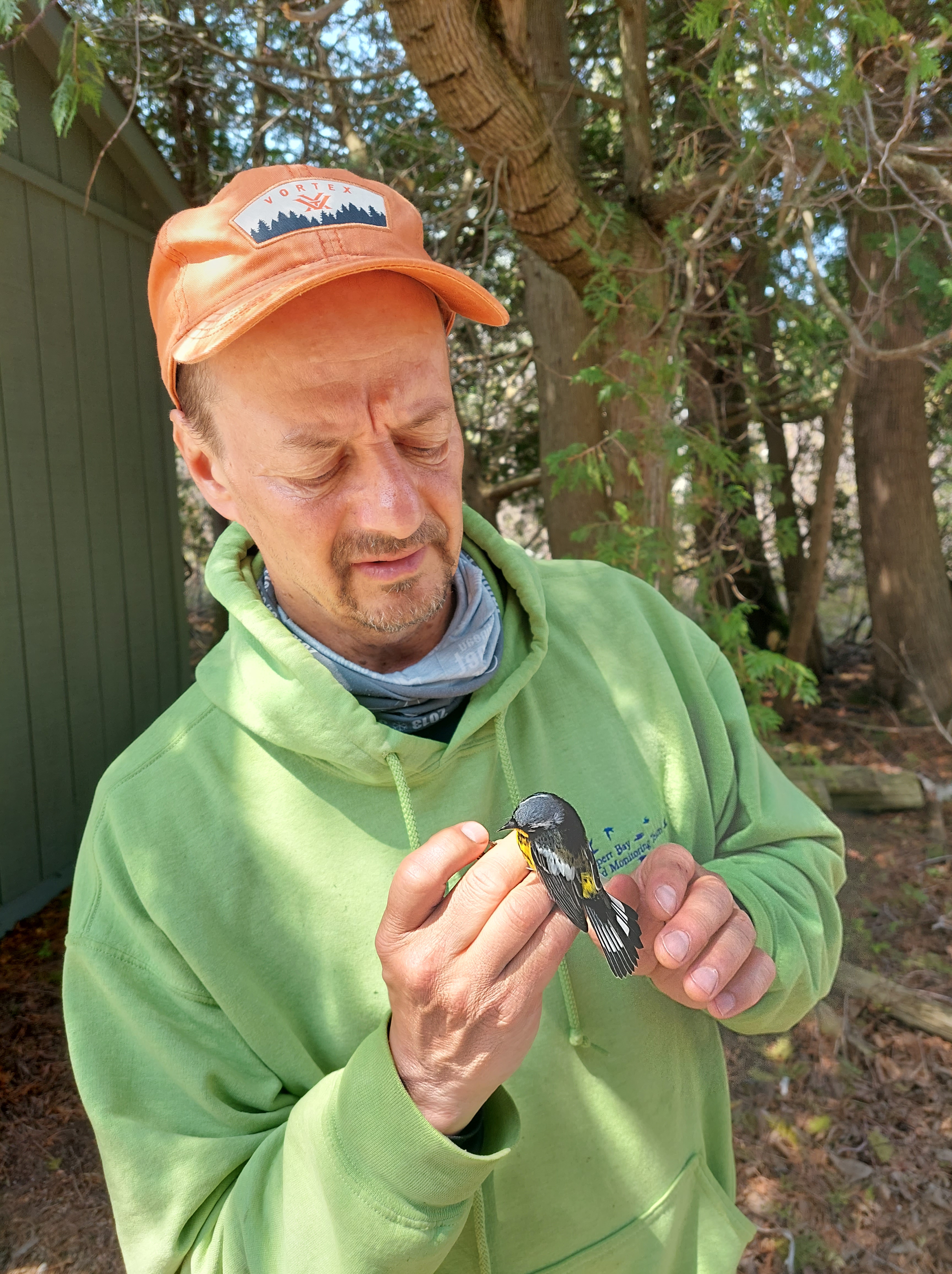
After census, the mist netting became busy. Surprisingly, all of the 15 nets were effective that day, each catching several birds. By the time we closed the nets we had captured and banded 113 individuals including record numbers of Bay-breasted Warbler and Tennessee Warbler, and near record numbers of Blackburnian Warbler.
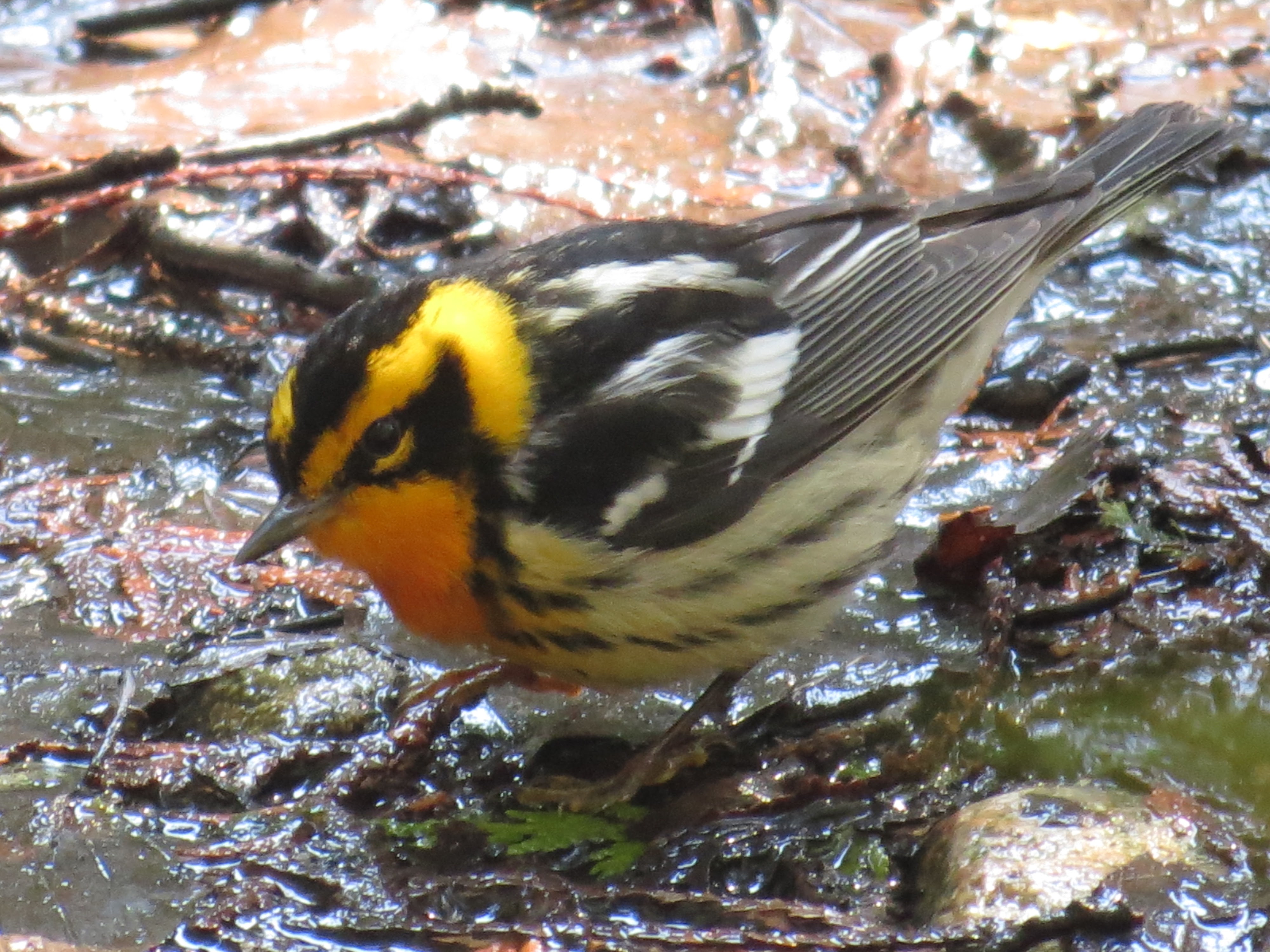
I continued birding around Cabot Head into the afternoon (beyond the count period). Common Nighthawk was the final species noted on what turned out to be a remarkable day with 95 species recorded within the count area for BPBO at Cabot Head.
After the warmth and richness in the bird world of Friday, Saturday brought cool temperatures and misty rain, preventing us from opening any nets. Fortunately, Stéphane made a roaring fire that gave us some much appreciated warmth, and the only fire of the week, despite a few below zero mornings, and a few days that did not get warmer than 5 degrees. I am so happy and grateful for my week at Cabot Head and to be able to share some of my experiences with you in this post. This week allowed me to renew my own skills in bird identification and bird banding. It reminded me why I love the place and why I dedicate my birdathon to supporting BPBO’s great venture to operate its migration monitoring station at Cabot Head.
I just completed this year’s Birdathon as the Corvid 23 Team, and in support of the Bruce Peninsula Bird Observatory. To support the great work of BPBO, please sponsor my birdathon by going to this link. You deserve to know about BPBO’s main activity – migration monitoring at Cabot Head. That is the subject of this post. The next post will be about my week at the research station in mid May, and my two Birdathon efforts.
Getting to BPBO’s Cabot Head Research Station.
Last year I lost the sight in my right eye two days before I was planning to drive nine hours to the Cabot Head Research Station, where BPBO operates its migration monitoring station. I had to cancel the trip, though I still tried to continue with birding and work, though both were compromised for a while. Fortunately, after two laser treatments to repair small tears in the retina, my sight returned to 100% in about a month though another month of floaters often confused me as distant birds. The day I actually did birdathon last year was the day of the “Derecho” – a wall of wind and rain that stretched for hundreds of kilometres and which ripped through the Outaouais, during the afternoon of birdathon!
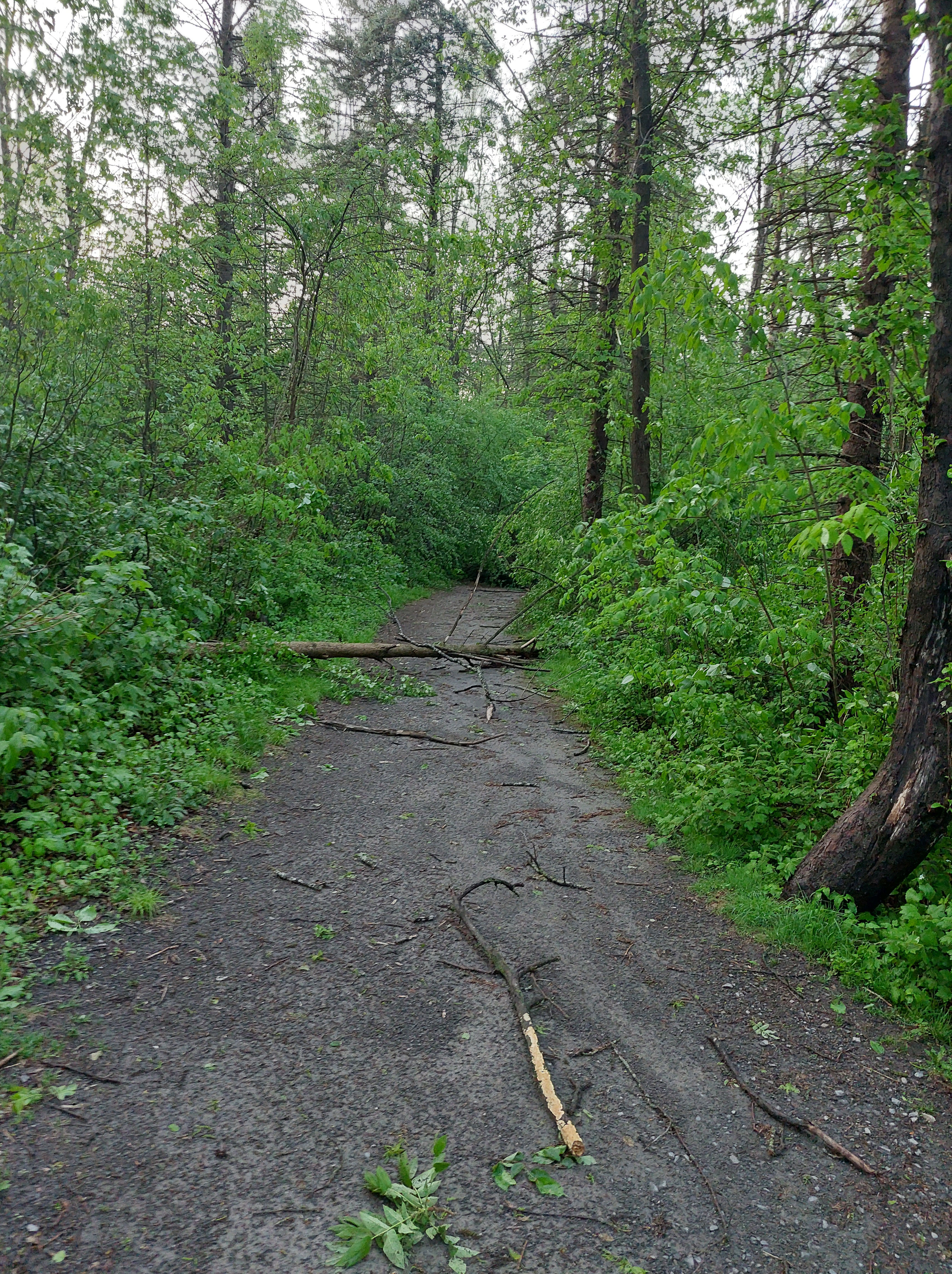
This year, no health issues interfered with the drive from Gatineau to Cabot Head on Sunday May 14, and my plans to spend the dream migration week in south central Ontario at one of my favourite spots on earth.
The Research Station is located in the Cabot Head Nature Reserve; an Ontario Parks protected area of the highest level, due to both the research station and the incredibly rich and rare ecosystems and plant communities. I must acknowledge that the Nature Reserve and the peninsula itself are the traditional and unceded lands of the Saugeen Ojibway Nation, which includes the Saugeen First Nation and the Chippewas of Nawash Unceded First Nation. We are aware of this and always grateful for their stewardship of these lands since time immemorial.
The last 10 kilometres of road between the small community of Dyers Bay and Cabot Head are not for the faint of heart. Parts of this road, historically maintained by the municipality, cross private lands, adding uncertainty to the question of responsibility for maintenance. Fortunately, BPBO staff and volunteers have access, for which we are grateful. Once past the combination-locked gate, the ‘road’ hugs the eroding rocky shoreline that separates the heavily wooded east-facing scree slope of the Niagara Escarpment on one side from Georgian Bay on the other. During daylight, the pot-holed narrow road is scary enough, but as I arrived at dusk, shadows exaggerated the drop off the side of the road, its narrowness, the potholes, and the size of the beach stones scattered on its surface. High water levels a few years back eroded the shore to the very edge of the narrow road in many places, literally leaving it hanging. One moment of distraction and the car could roll off the road into the icy waters of Georgian Bay.
The last two kilometres to the station follow a potholed lane, flooded in places, branching off the road that continues to the Cabot Head Lighthouse. The lane circles a body of water known as Wingfield Basin; the last 200 metres along a heavily wooded narrow peninsula with the research station near the tip. The peninsula itself represents an ancient beach ridge along the coast separating 80 kilometres of Georgian Bay to the north from the tiny Wingfield Basin, which is approximately 500 metres wide. Water circulates in and out of the basin to Georgian Bay through a 90-metre opening. Wingfield Basin is the only safe harbour along the north part of the Bruce Peninsula between Tobermory on Lake Huron and Lion’s Head on the Georgian Bay side of the peninsula. Some days in the summer, the basin fills up with sailboats, their crews anxiously waiting out storms. Across the basin from the research station, is the Cabot Head lighthouse. The Lighthouse was decommissioned in the 1988, replaced by an automated light but the restored original buildings remain, though closed to public over the past few years.
Monday morning I awoke at 5H15 to help Stephane open the mist nets. Stephane, who has a PhD in Ornithology, started working for BPBO as Station Scientist in 2003. Returning each spring and fall like many of the birds that pass through here, suits his lifestyle well. He is superb at this work, meticulous, reliable, and skilled with the birds and at one with the solitude of the remote station. He publishes the BPBO blog post every week during spring and fall migration. His style of writing is entertaining and his posts always make an enjoyable read. Those of us who support BPBO are delighted that he is still with BPBO, and still enjoying the work by all accounts, 20 years after joining us.
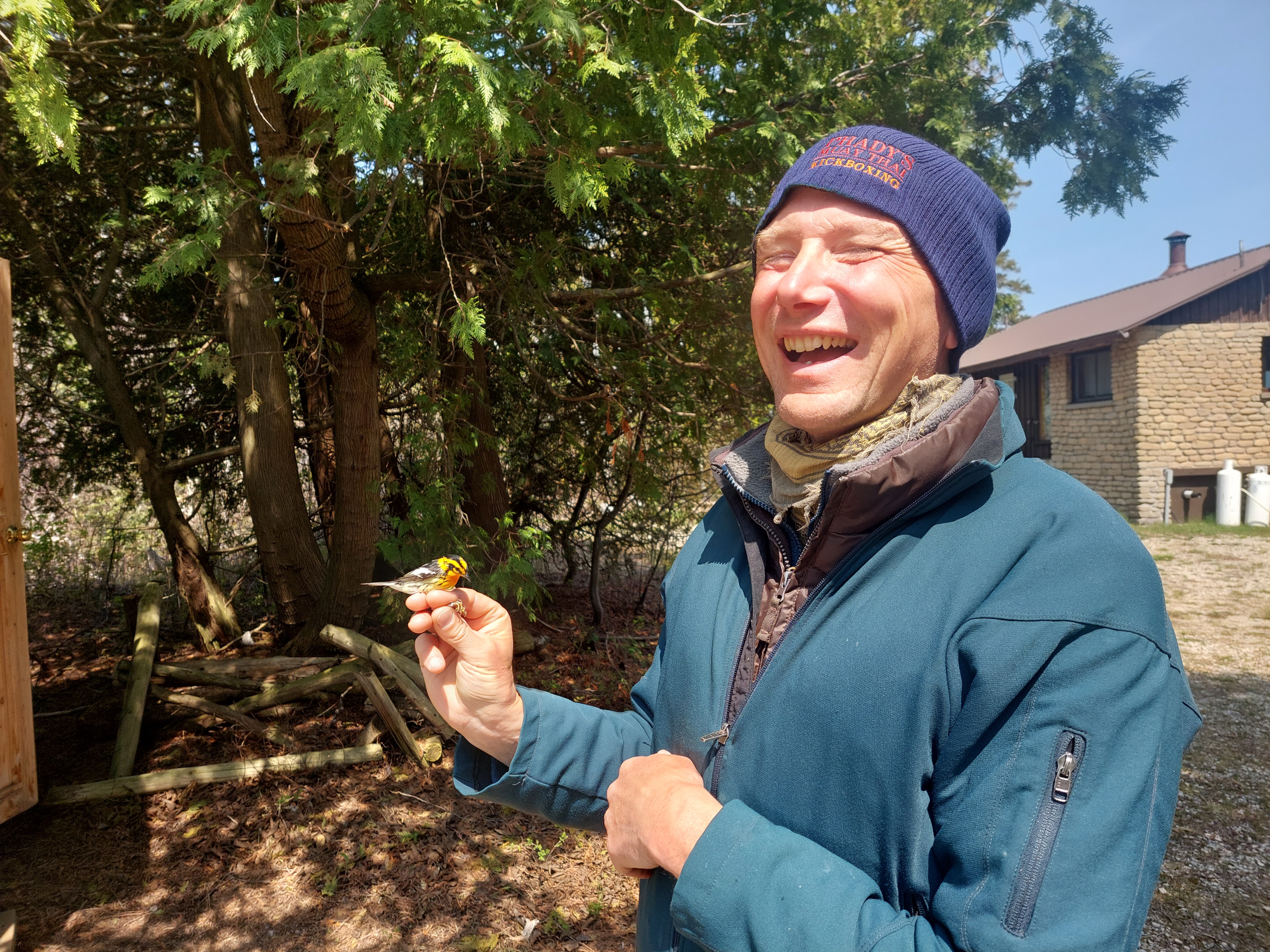
How we monitor birds
Stephane oversees the migration monitoring operation, the main activity of BPBO. Watch this excellent TVO short video to meet Stephane and learn how the station operations, particularly how the bird banding part works. We follow standard protocols each day in the spring, between April 15 to June 10, and in the fall, from August 15 to November 1, to track populations of birds that pass through the station’s area. Each day, we determine the number of individuals of each species of bird, by three different sampling methods. One is by catching and banding birds using a series of 15 mist nets distributed over about 150 metres of forest and forest openings to intercept birds flying below three to four metres. We open the mist nets, which are 2.5 m high and 12 m long, 30 minutes before sunrise, keeping them open for 6 hours. Inclement weather such as wind or rain results in not opening or closing nets to reduce risks to birds. We check nets every 30 minutes, during which time any birds are removed and transported to the banding lab where they are processed (identified to species and sex, banded, measured, weighed, and released). A second method used is the census. The census is a fixed route, walked by one person who has a very good knowledge of birds and the ability to identify most species by sight and sound. The route is almost one kilometre and takes exactly one hour. Census starts one hour after sunrise and is carried out everyday regardless of the weather. The final method is called “casual observations.” Volunteers and staff at the station always have their binoculars with them and their ears tuned to the birds so that observations are added during and between net checks. Weather conditions and the number of birds in the nets influence how much effort can go towards “casual observations.” At the end of the day, numbers from all three methods are recorded to estimate the number of birds of each species present or passing through the research station’s coverage area.
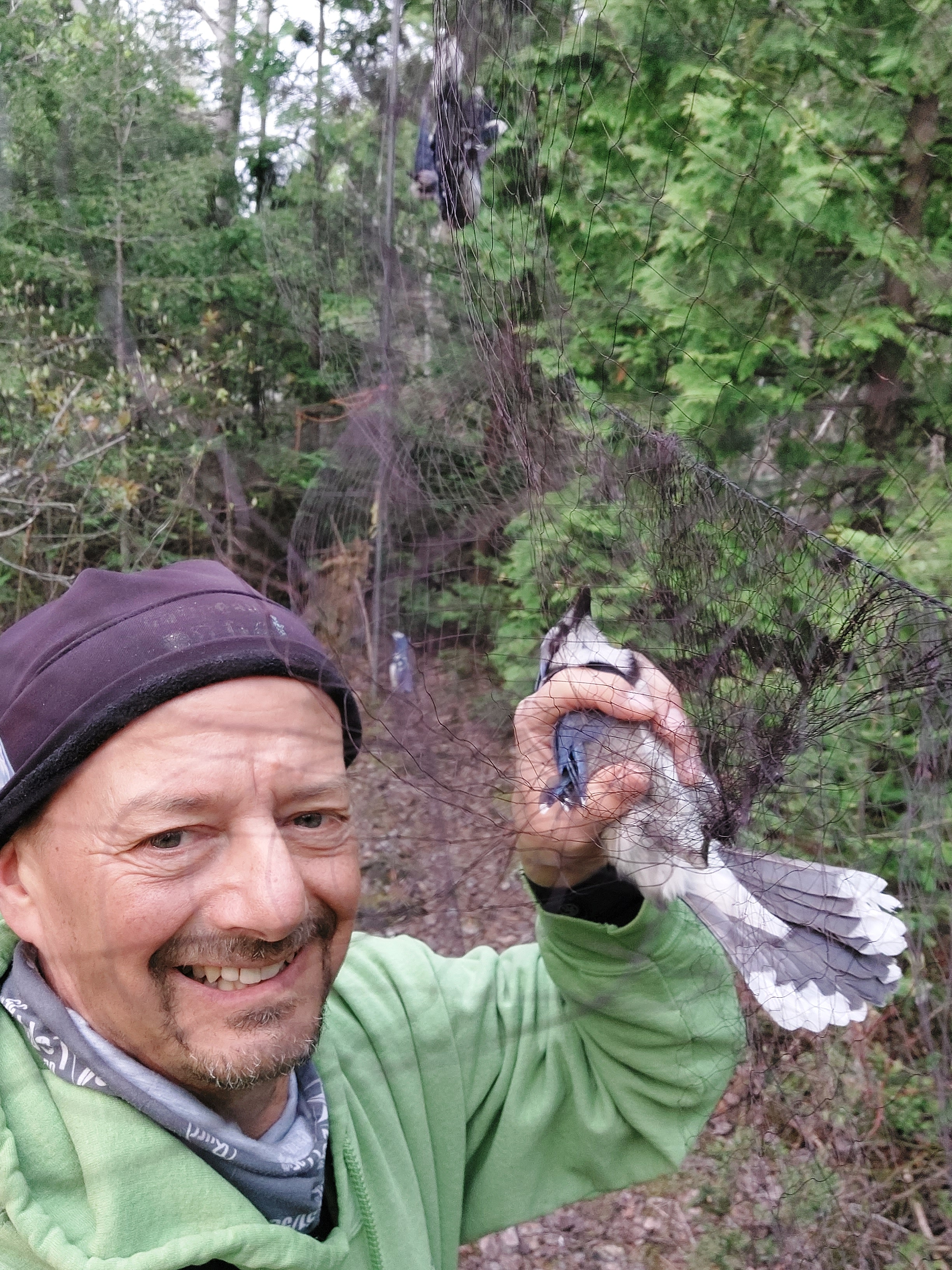
As I mentioned, I awoke at 5:15 on Monday morning after about six solid hours of sleep in my narrow sleeping bag on the bottom for one of the two bunk beds in the volunteer bedroom. It was still fairly dark, cold and windy outside, not what I would consider a morning that favours migration. Together with Stephane, we managed to open the nets in less than 20 minutes, giving me time to sip some coffee before the first net check. To be continued . . . .
Please support the Bruce Peninsula Bird Observatory (BPBO) by sponsoring my Corvid 23 Team in Birdathon 2023. In late May I will raise funds for BPBO through the Great Canadian Birdathon. I will do two birdathons, one while volunteering at BPBO’s Cabot Head station the week of May 15, and a second time from my home in Gatineau. Both will be motorless.
A few of us established BPBO in 2001, thanks to an agreement with Ontario Park to use their Cabot Head Nature Reserve. We grew to over 100 members and supporters in the next few years. We restored the two abandoned cottages. One became Grebe Lodge – for observatory guests, and the other Wingfield cottage, home for the Station scientist and long-term volunteers. In the past few years BPBO survived COVID, major challenges with aging infrastructure, and a washed-out access road. Plus we are no longer are connected to the electricity grid, giving us no choice but to “go solar.” We depend on a small team of observers, headed by our Station Scientist Dr. Stephane Menu, supported by volunteers who come from all ends of the earth to spend a week or a month to help monitor the migration. Your donation helps pay for their lodging and meals.
Learn more about BPBO here, and sign up for the regular blog by Stephane.
Please support my Corvid 23 team with a healthy donation. My wife and I donated $250 to my birdathon last year. Any amount you contribute is deeply appreciated! Birds Canada will issue you a tax receipt for donations over $15. Our goal is to raise $4000!
I will share a post about my birdathon here on my own blog.
Please use this link to get to the donation page: https://www.canadahelps.org/s/nDvRuY
Thank you, merci, gracias, obrigado, meegwetch!
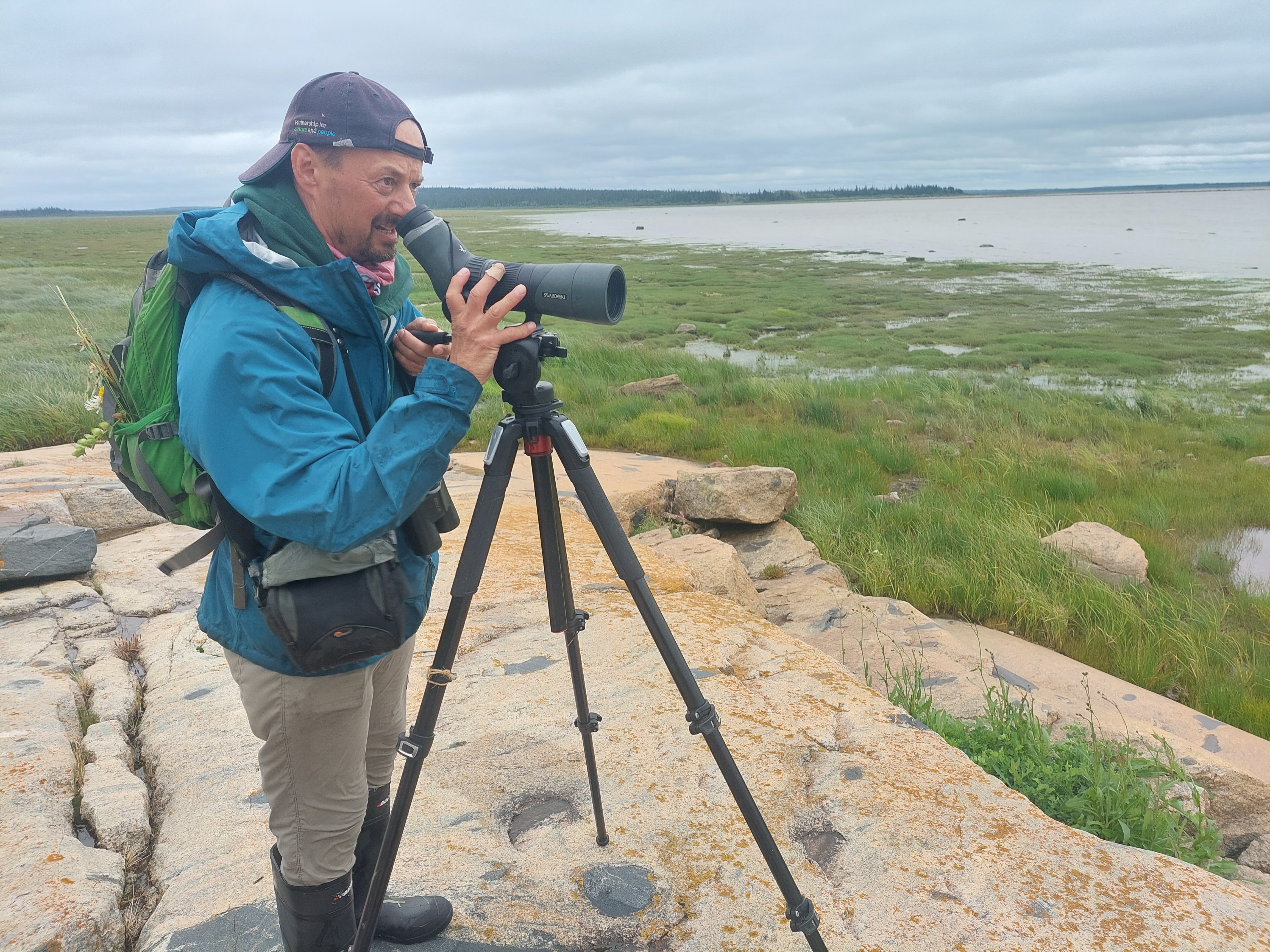
Most of my life I’ve taken my good vision for granted. A trip to an optometrist a few years back reinforced my sense of vision invincibility when he quipped “many people would give a lot for your eyes.”
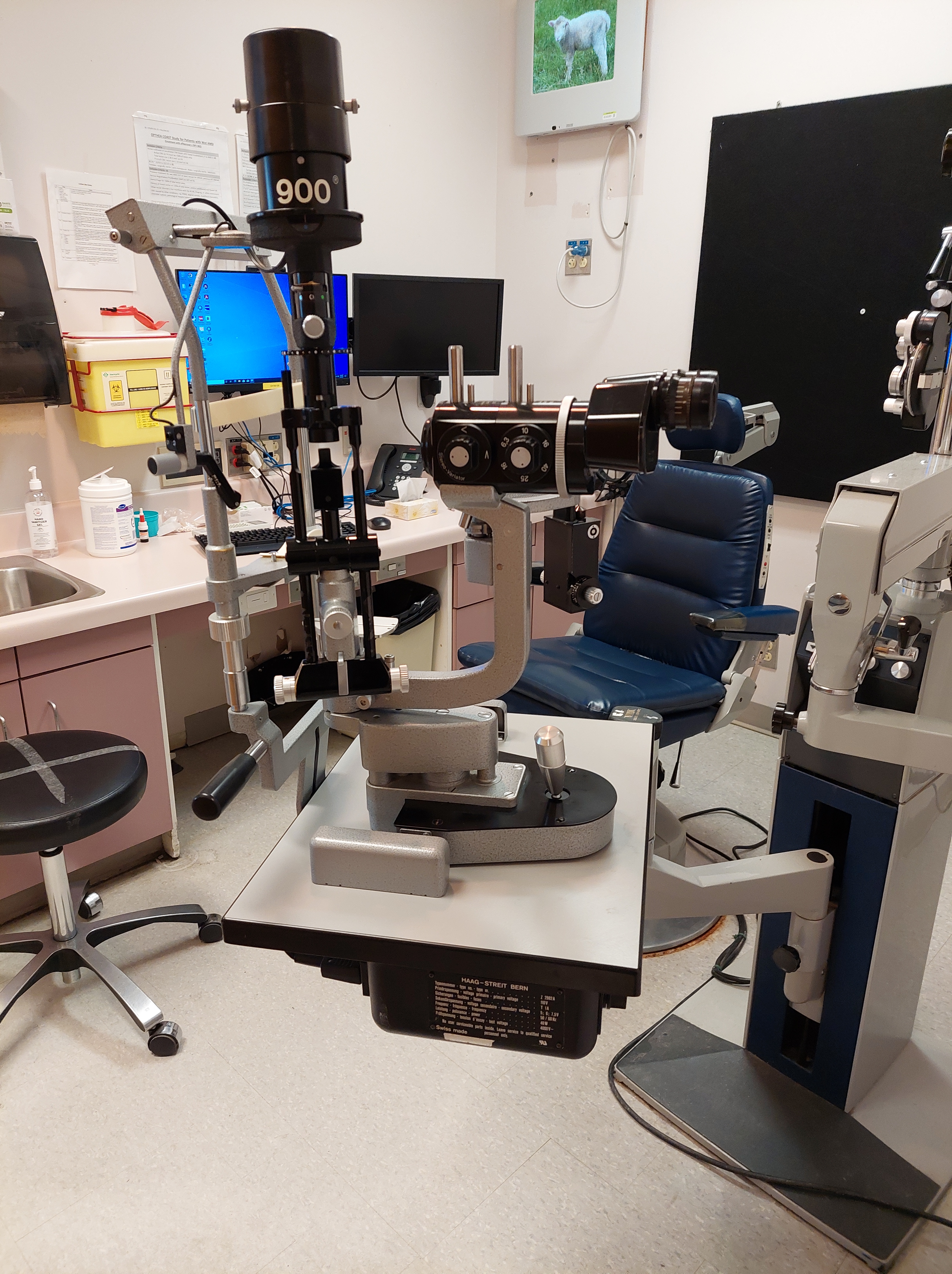
Earlier this winter, I had my first eye concern when I started getting flashes of light in the peripheral vision of my right eye. A trip to the optometrist revealed a tiny hole in the retina, the source of the flashes, that I would need to monitor closely. An appointment with an ophthalmologist was made for May. Over the next weeks, the flashes diminished and ended. Over three months later, I visited a retina specialist who confirmed that the injury healed over and everything looked healthy.
Three days after this visit everything changed. I had just finished leading a birding walk with friends and colleagues, and was returning to my bicycle when I noticed some floaters in the right eye. Now, I’ve had floaters in my eyes before, but this time was different. The floaters were increasingly obstructing vision in the right eye. In the 10 minute bike ride home, there were more and more waving filaments interfering with vision, some thickening or combining into dense globules with diffuse edges. Thirty minutes later, clarity of view was gone. It was like looking through a thickening screen. By the time the emergency doctor in Hull hospital examined me, about 90 minutes after onset of the first symptoms, I could no longer see my hand in front of my face.
I’ve learned much about eyes and ageing over the past two weeks. The vitreous humor – the jelly-like substance in the eye, gradually loses volume with ageing, sometimes causing the outside surface of the vitreous to dethatch from the retina. Occasionally, as a consequence of shrinking, the vitreous surface pulls a bit of the retina with it, creating a tear, and in a worst case, causing retina detachment.
My injury put an end to plans to drive 10 hours to Cabot Head Research Station on the Bruce Peninsula, spend a week helping Stephane, the Station Scientist, with migration monitoring, and do my birdathon 2022 at Cabot Head. Now I would need to discover what birding is like without use of my right eye.
While I was in the Emergency department of the Hull hospital, trying to figure out what was happening and what to do, I realized that I could see what was happening inside of my eye. Within the fog, I could see increasing density of thousands of tiny black round dots, swishing around the haze. Later I learn this was blood from a blood vessel that ruptured and bled into my eye. My eye filled with blood, or so the doctors told me. This prevented me from seeing out, but also them from seeing in. Doctors tested the pressure within my eye – because adding blood could increase the pressure to a dangerous level. Fortunately this was not the case with me.
Over the next six days I would have four ultrasounds of my eyeball. I didn’t even know ultra-sounding an eyeball is a “thing.” “That’s cool” I thought – can’t see the back of my eye because of all that blood in it, so the next best thing is to use a mini sonar to see the retina, not unlike searching for lake trout in the depths of Loon Lake.
This impaired vision has taught me a few things that I’ve taken for granted. One involves judging distances. When Cris drove me home from the hospital the first time, she pulled into our driveway beside our house. A bit irritated, I told her that she parked too close to the wall for me to open the door, and asked that she reposition the car. She laughed and said “just try.” I opened the door and discovered there was lots of room. Since, I’ve also knocked over a flower vase full of water, poked many things that I had judged as further or closer and came within millimeters of poking out my right eye while attempting to navigate through a brushy section of forest. Lesson to me – I suck at judging distances when I only can see from one eye and need to be more careful.
It also makes birding by vision really tough. As I was largely confined to our house and yard over the week that vision in my right eye was completely obstructed, I spent a fair bit of time in the backyard trying to identify birds for my yard list. I completed 10 ebird checklists over that period. But I learned how tough it is to locate a small bird high in the foliage of the trees in our yard with one functioning eye. Those darn warblers move so fast through the foliage! I know I missed many warblers, flitting through the early leafed-out foliage of the maples in our yard. Fortunately a beautiful pair of Great Crested Flycatchers have moved into the neighbourhood. They are a treat, perching out in the open and emphatically announcing their presence with a loud “RRRRIP” call.
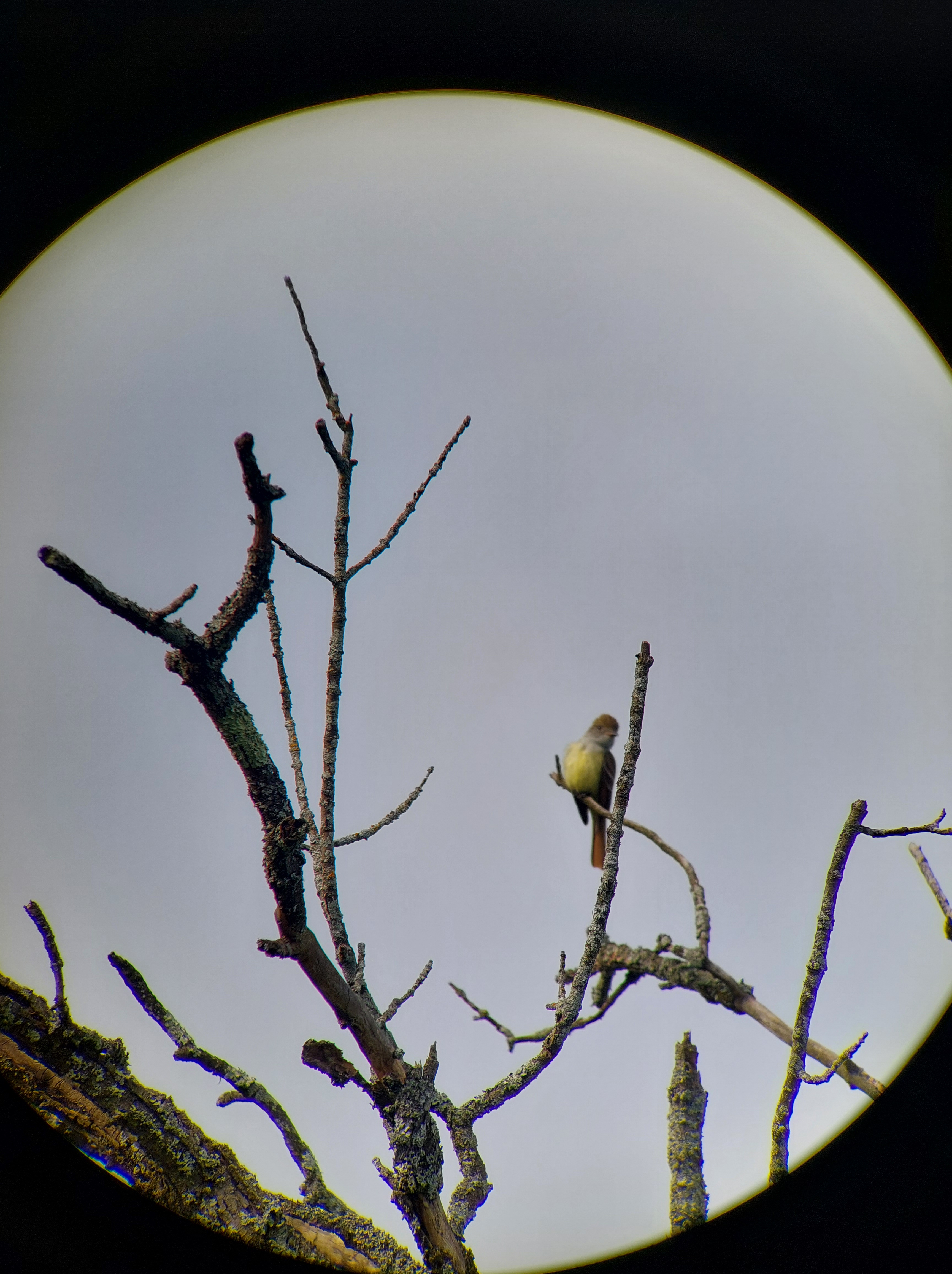
Once the eye started clearing up and my vision started returning, though still quite impaired, I was shocked to learn that my right eye was no longer aligned with the left eye. My eyes were crossed and I had double vision. What a strange an uncomfortable feeling it was. Fortunately it didn’t last long. As the eye gradually cleared, to my relief, the double vision resolved itself. Now, nearly three weeks later, I’ve gone from zero to 100, or more like 90% of my vision has returned. The fog is pretty much gone though there is still a debris field which I imagine is the remains of a comet orbiting a tiny black hole in the middle of my eye. Now I can use both of my eyes to do my favourite pastime – observe birds.
The remaining frustration for birding is the innumerable floaters – from tiny specks by the hundreds or thousands, constantly swirling through my vision, complicated by large diffuse sweeping forms, not unlike drops of ink diffusing in water. Of course when watching the sky, I’ve learned the 95% of the time that I detect movement, disappointingly it is not a bird, but rather a floater in my peripheral vision.
Thank god for my hearing, which still serves me well, but may well be the subject of a blog post like this one in a few years.
My hearing identified most of the birds on my list for birdathon – which I did on May 20. Birdathon will be the subject of the next blog post.
Nous vous serions très reconnaissants de bien vouloir faire un don de bienfaisance pour soutenir le Bruce Peninsula Bird Observatory – Observatoire d’oiseaux de la péninsule Bruce (BPBO) cette année. Je passerai une journée entière à observer autant d’oiseaux que possible afin de recueillir des fonds pour BPBO dans le cadre du Grand Birdathon canadien. Cliquez ici pour accéder directement à ma page de dons.
Moi, j’habite Gatineau depuis 2006, et je suis active dans le Club des Ornithologues de l’Outaouais. Mais mes efforts sont pour appuyer le Bruce Peninsula Bird Observatory, qui fait du travail formidable sur le suivi des migrations et pour la conservation des oiseaux.
Permettez-moi de vous parler de BPBO (Bruce Peninsula Bird Observatory) l’observatoire d’oiseaux de la péninsule Bruce, un petit coin de l’Ontario avec une richesse de biodiversité sans égale. Je faisais partie d’un petit groupe des gens qui ont fondé BPBO en 2001, établissant une station de recherche dans la réserve naturelle de Cabot Head du parc de l’Ontario pour suivre les migrations printanières et automnales depuis. L’observatoire a un côté français. Dupuis 18 ans notre gestionnaire de la station est Dr. Stéphane Menu. Stéphane est français, mais il a fait son doctorat à l’Université de Laval sur les Oies des neiges dans l’arctique canadien. Souvent, il y a des bénévoles pour nous aider avec les suivis, venant du Québec.
Plus que jamais, le birdathon est devenu une source de financement incontournable. L’an dernier, notre équipe a soulevé plus que 5000 $ dont 4000 $ sont allés à BPBO. Ensemble nous pouvons atteindre ce montant cette année. Avec votre généreux soutien, c’est possible.
S’il vous plaît, faites un don à BPBO si vous êtes un partisan de BPBO, si c’est simplement que vous aimez les oiseaux ou le Bruce, ou si vous me connaissez, et combien cela signifie pour moi. J’ai moi-même fait don de 100 $.
Laissez-moi vous parler un peu de la journée. Je ferai un compte rendu détaillé de ma journée ici, sur mon propre blogue https://birdingfromthebalcony.ca/. Cette année, j’espère faire mon birdathon dans les alentours de Cabot Head où je serai bénévole pour le programme de surveillance de la migration entre le 16 et le 21 mai. Cela sera un birdathon “vert” pour moi, soi a pied ou a bicyclette. J’espere que Stephane peut me donner un coup de main a trouver des oiseaux.
Aidez-moi à soulever 5 000 $ pour la conservation des oiseaux. Nous pouvons y arriver, mais uniquement avec votre généreux soutien. Oiseaux Canada vous émettra un reçu d’impôt pour les dons de plus de 15 $.
S’il vous plaît, donnez généreusement à mon birdathon pour BPBO cette année. Utilisez ce lien pour accéder à la page de don: https://www.canadahelps.org/s/FjNst
Je fournirai des mises à jour en direct de mes progrès sur mes pages Facebook et Instagram.
Merci d’avance!
Ted
 birdingfromthebalcony